Curation
Doubles & Triples
Three Rooms Gallery, October 2025
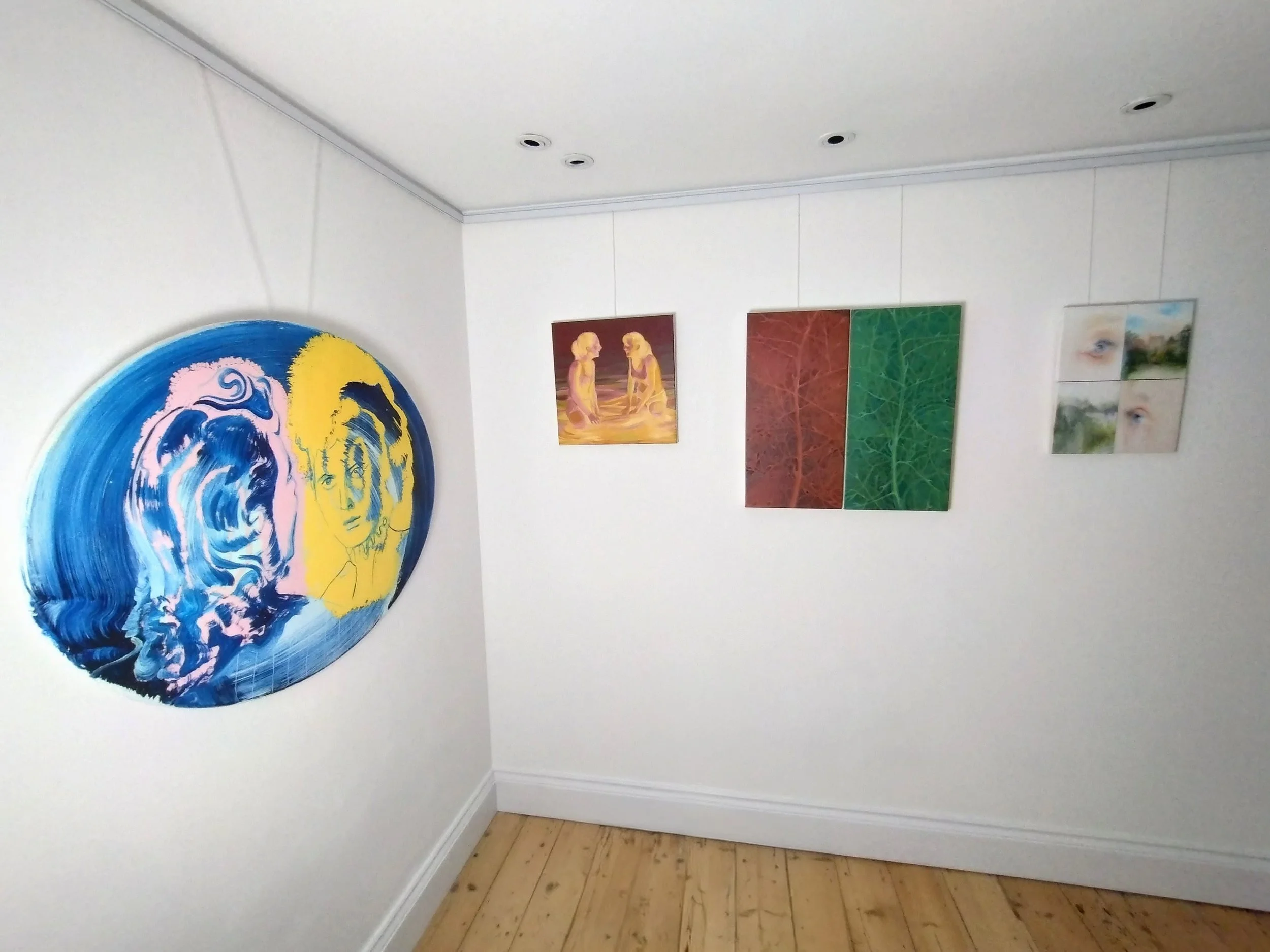
Left to right: Lucy Cade; Melitta Nemeth; Robyn Packham; Georgia Peskett: Three Rooms Gallery, Walthamstow, London, UK, October 2025
'Doubles + Triples' considered the notion of doubling and tripling, conceptually and in terms of observed or embodied social relations and psychological tropes, created by a group of nine artists living & working in the UK and internationally . It featured the work of Alex Fox, Melitta Nemeth, Cathy Lomax, Hannah Wooll, Kate Knight, Lucy Cade, Marie-Anne Mancio, Georgia Peskett and Robyn Packham and was curated by Lucy Cade.
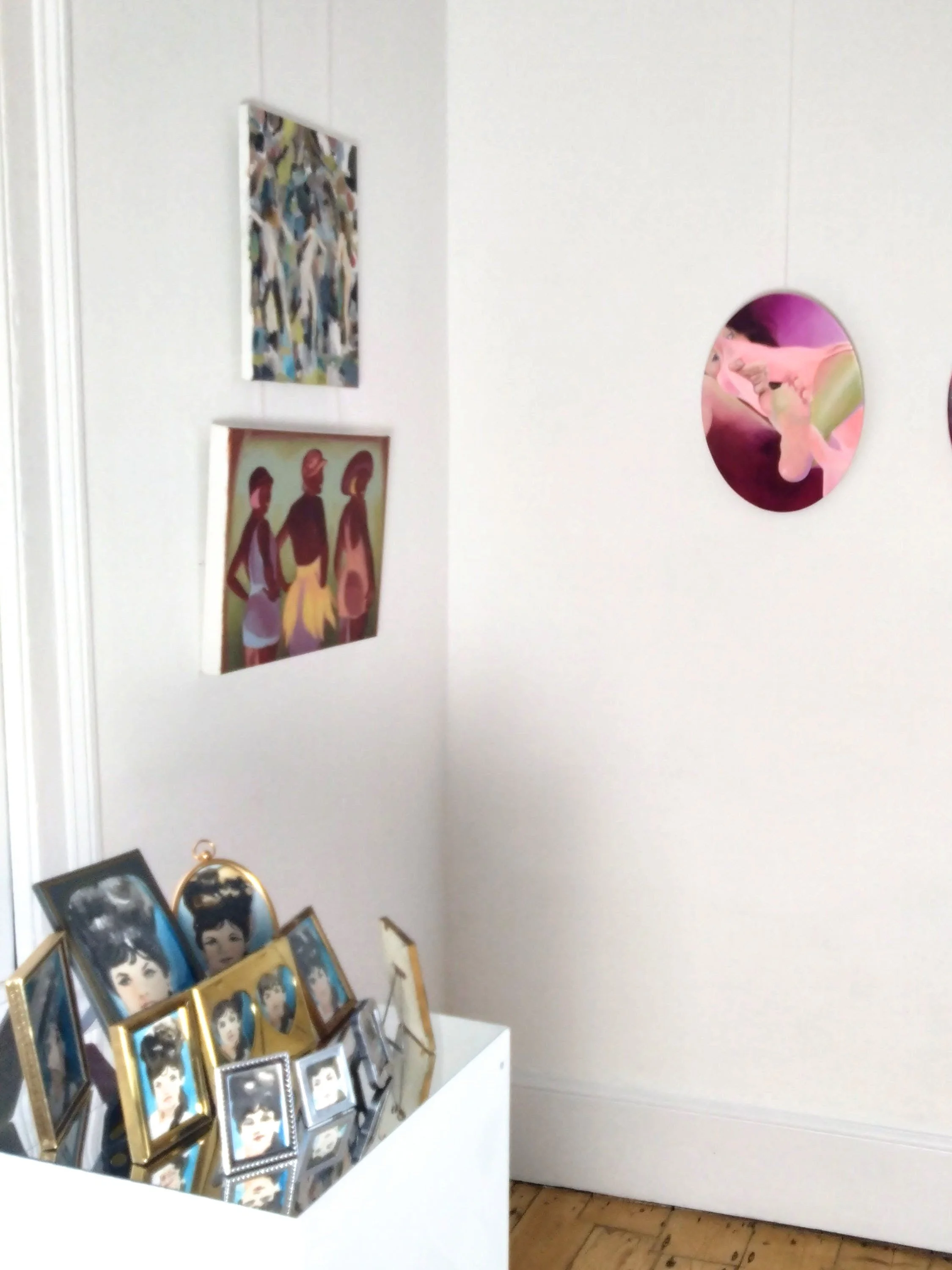
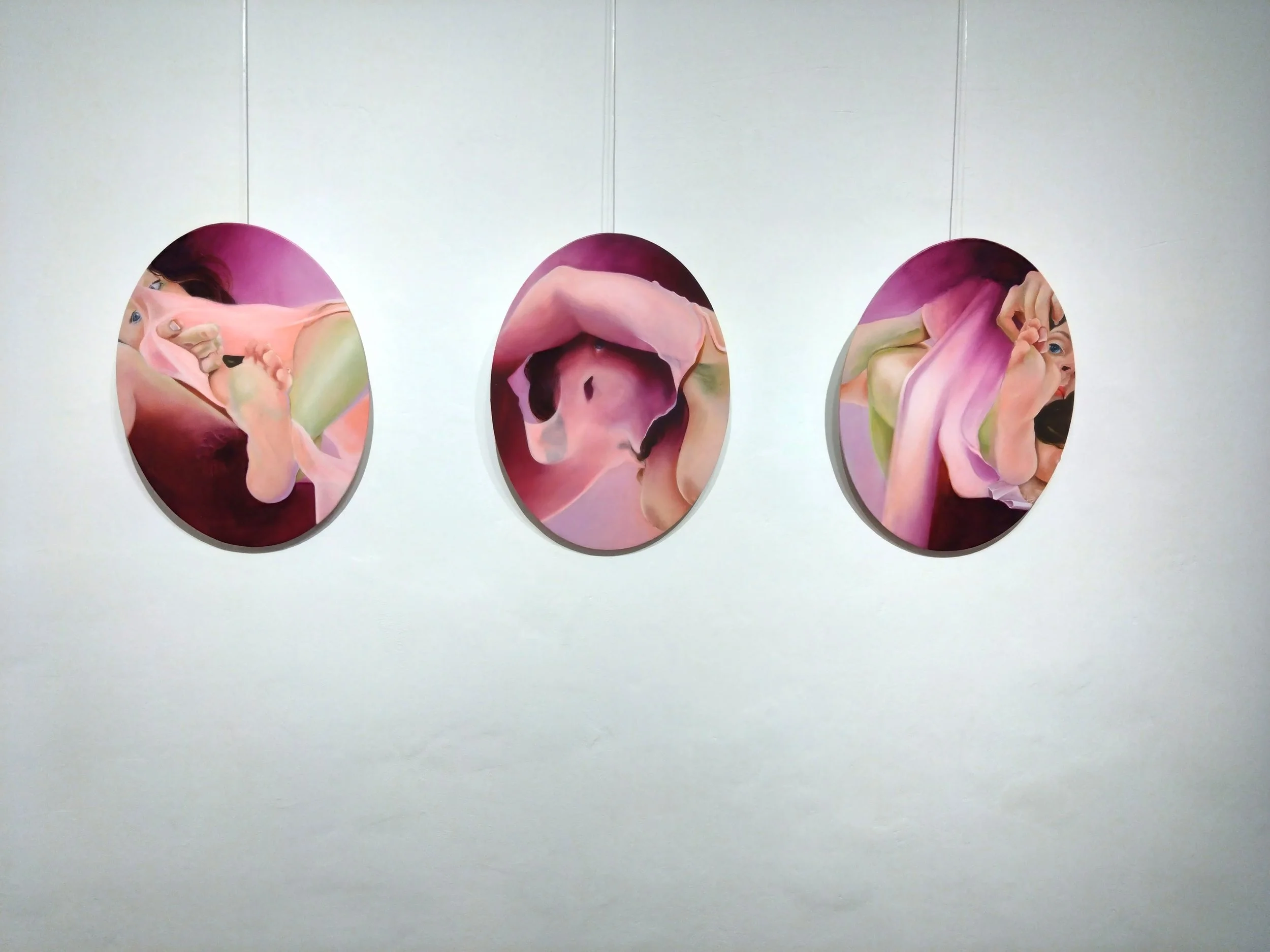
Left: from left to right, bottom to top - Cathy Lomax; Melitta Nemeth; Alex Fox; Kate Knight (just seen) Right: Kate Knight, Fitting Room, Oil and Genuine Gesso on Panel, Triptych, 40 x 30cm each, 2025
‘From twins and reflections to the rule of three, we humans are calibrated to spot patterns, and doubles and triples are perhaps the most frequently occurring of those patterns in art and life. Delving deeper, doppelgangers haunt cultural history, as Naomi Klein points out in her recent book on the experience of having an actual doppelganger in the digital world and how this reflects broader tendencies to double ourselves on and offline. It has been said that the phenomenon of the doppelganger only resolves when one eliminates the other, yet twins often survive in life by their shared parallel experiences. Doppelgangers can both guide and restrict us in our quest for recognition and individuality. Trios, especially of women, have been used to structure thinking about similarity and difference: the trio of Graces, each beautiful yet with individual features; and trios of female archetypes (the mother, the crone, the maiden) or the witches in Macbeth, linguistic trios interestingly also being associated with incantation and magic. In some cultures twins are magic and a blessing from the gods, yet in others they are feared - doubles and triples seem to have an incantatory power either way’.
Lucy Cade, October 2025
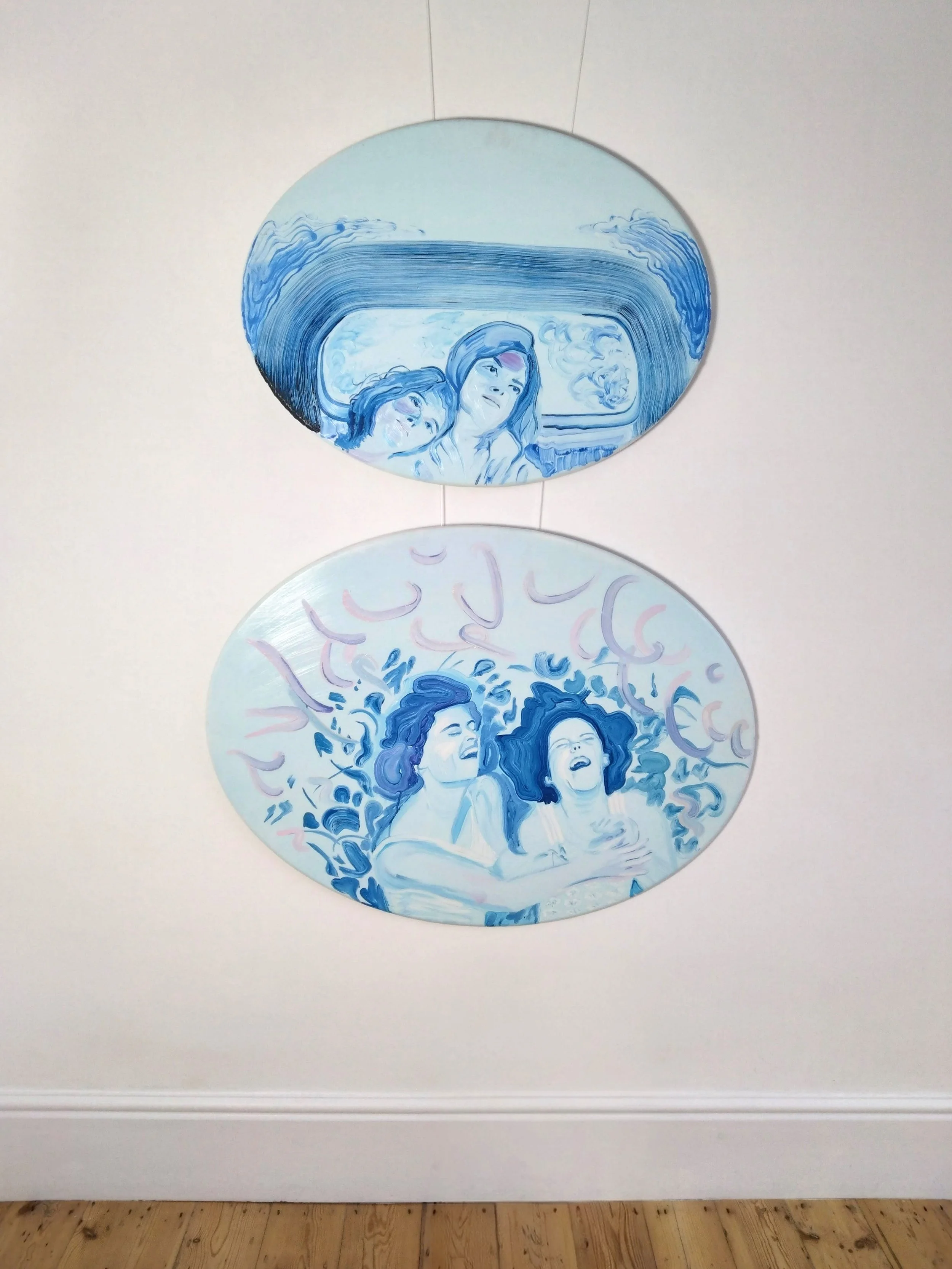
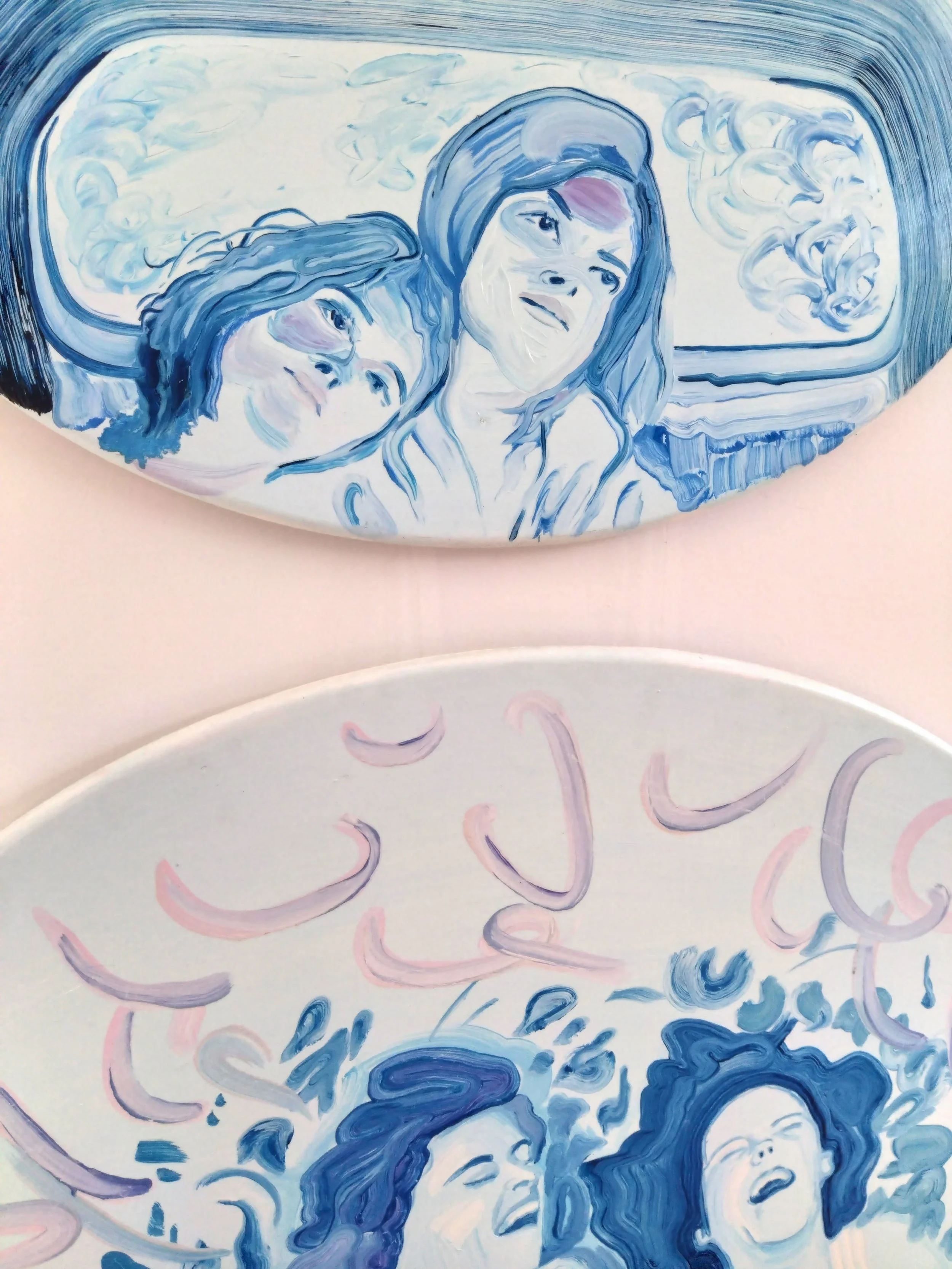
Lucy Cade, Folies a Deux (The Madness of Two) 1 & 2, top Oil on wood, 60 x 80cm, bottom Oil on wood, 75 x 100cm; detail
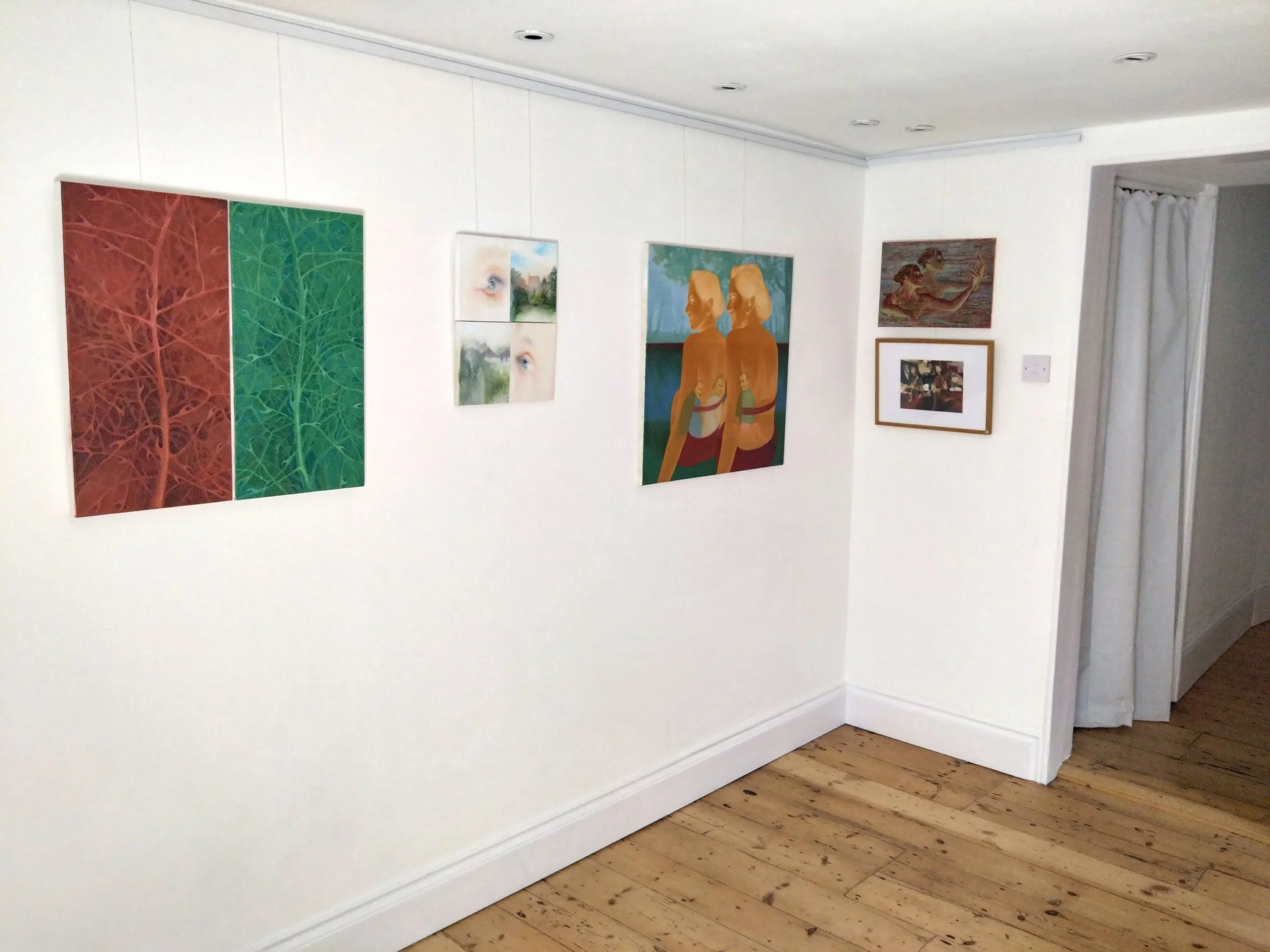
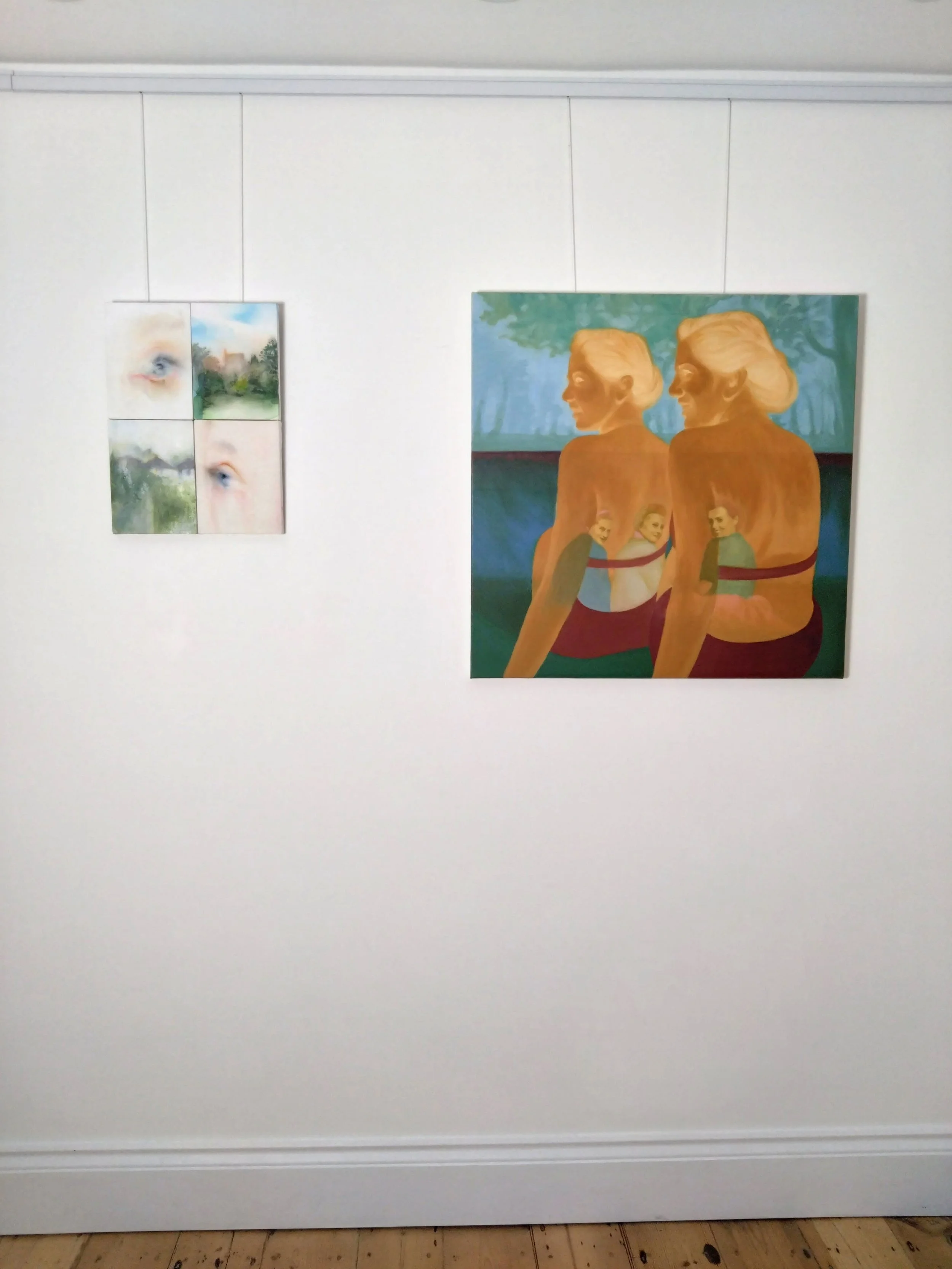
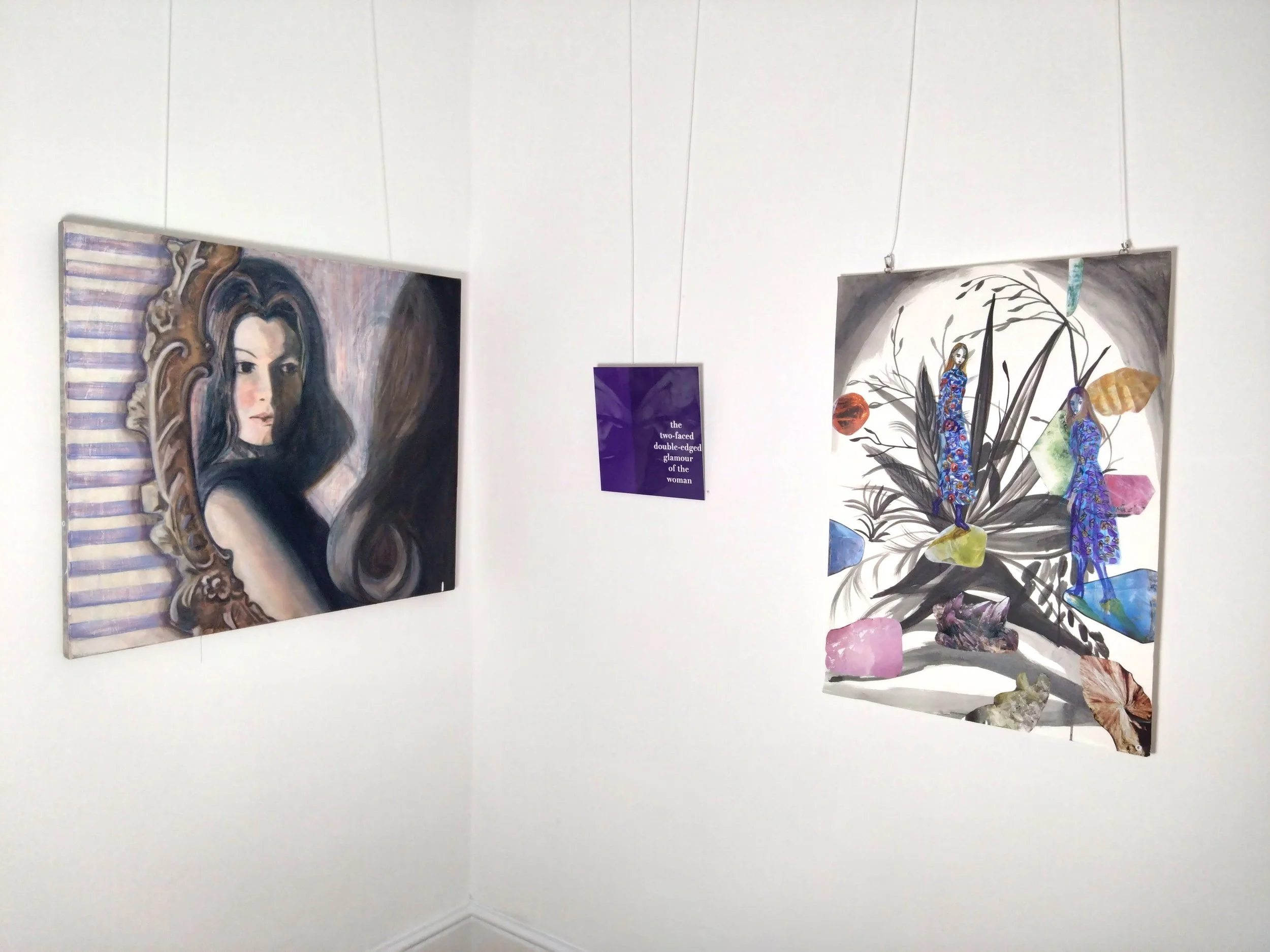
Left to right: Robyn Packham; Georgia Peskett; Melitta Nemeth; Melitta Nemeth (top); Alex Fox (bottom)
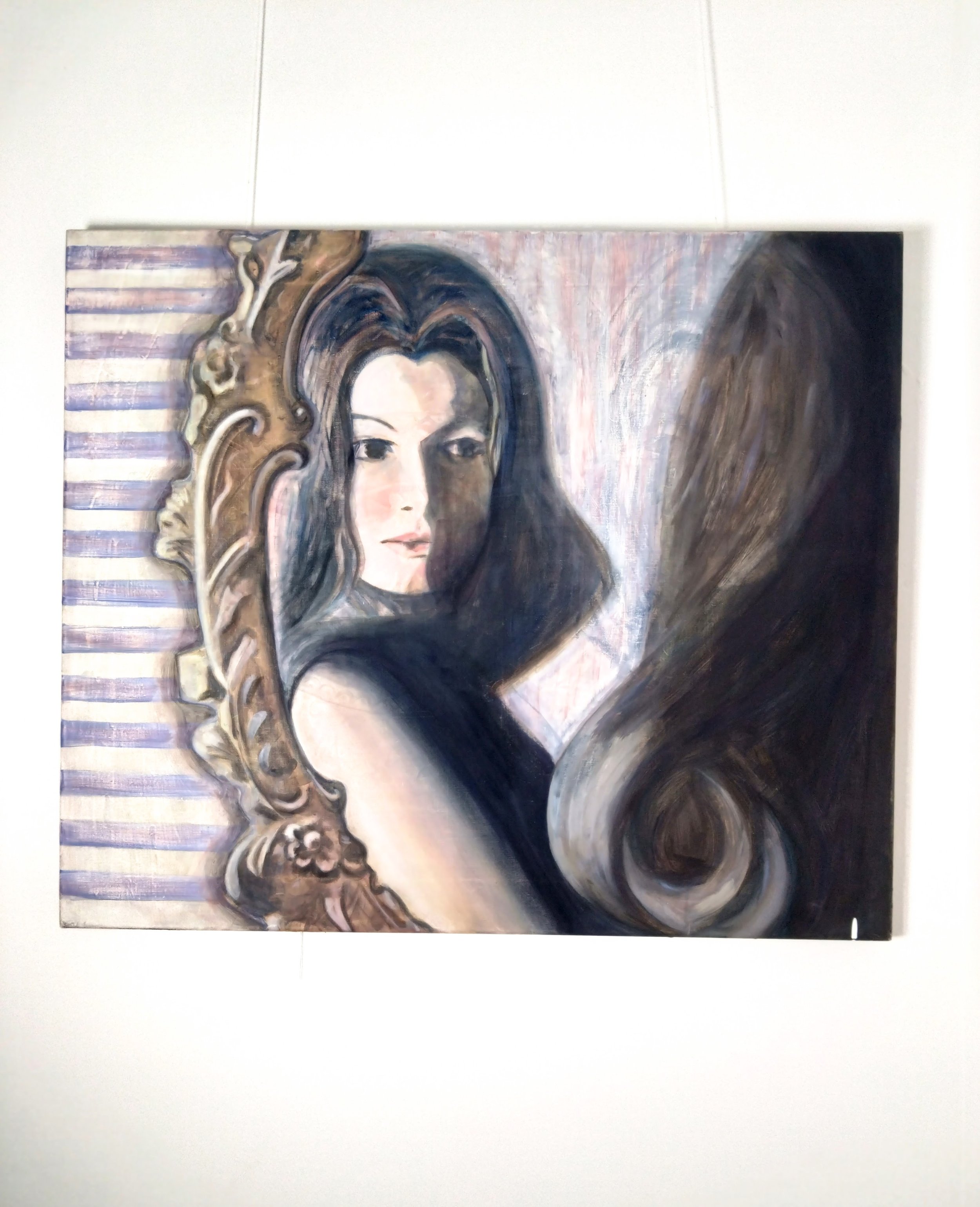
Left to right: Cathy Lomax; Marie-Anne Mancio; Hannah Wooll
Right: Cathy Lomax, If.... Oil on linen, 85 x 95cm, 2023
Quiet. Bright.
Terrace Gallery, March 2025
Curated by Lucy Cade; Graphic Design by Kika Sroka-Miller
Low saturation and high brightness; ‘quiet but bright’: these are physical qualities of the colours employed by the 14 artists in Quiet.Bright., brought together by Lucy Cade in a show exploring pastels (any colour mixed with white)
Featuring: Liz Crossfield, Sarah Barker-Brown, Lucy Cade, Kate Knight. Jennifer Nieuwland, Kika Sroka-Miller, Emily Stevens, Sara Breinlinger, Matthew Swift, Benedict Johnson, Hermione Carline, Lucy Robb, Hope Turnbull and Carolina Ambida
The show featured a panel talk ‘Glowing, Gentle, Sensual or Still?’ to celebrate the opening of Quiet. Bright.
Artist Panellists shown here(from left to right): Kika Sroka-Miller Benedict Johnson, Kate Knight and Liz Crossfield Host (right): Lucy Cade

Panel talk at Quiet.Bright, Terrace Gallery, London, March 2025
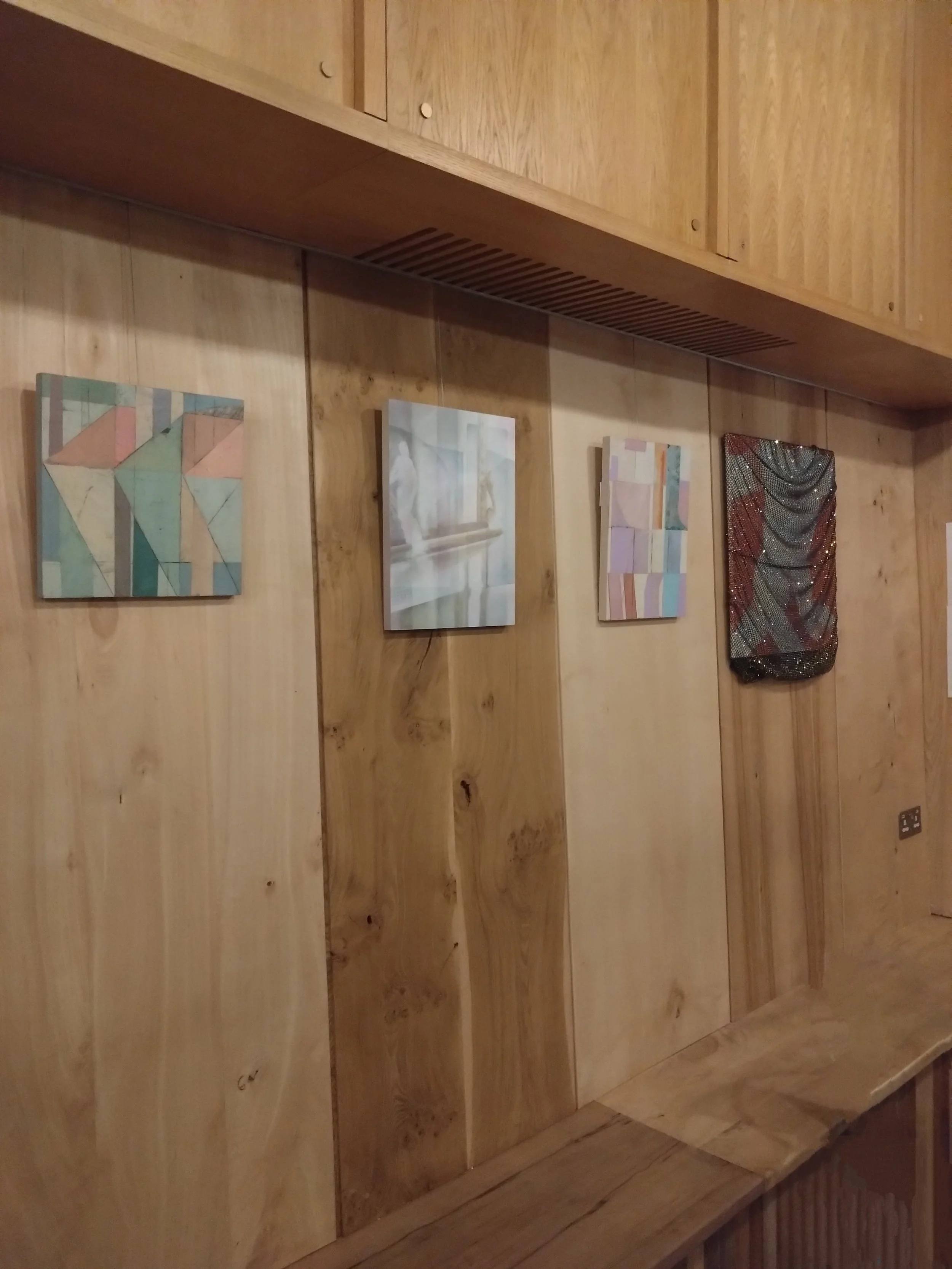
Installation view of Quiet.Bright, Terrace Gallery
Dancing to a Mirror
Fitzrovia Gallery, London, September 2024
Curated by Lucy Cade, with assistance from Martina Larsson
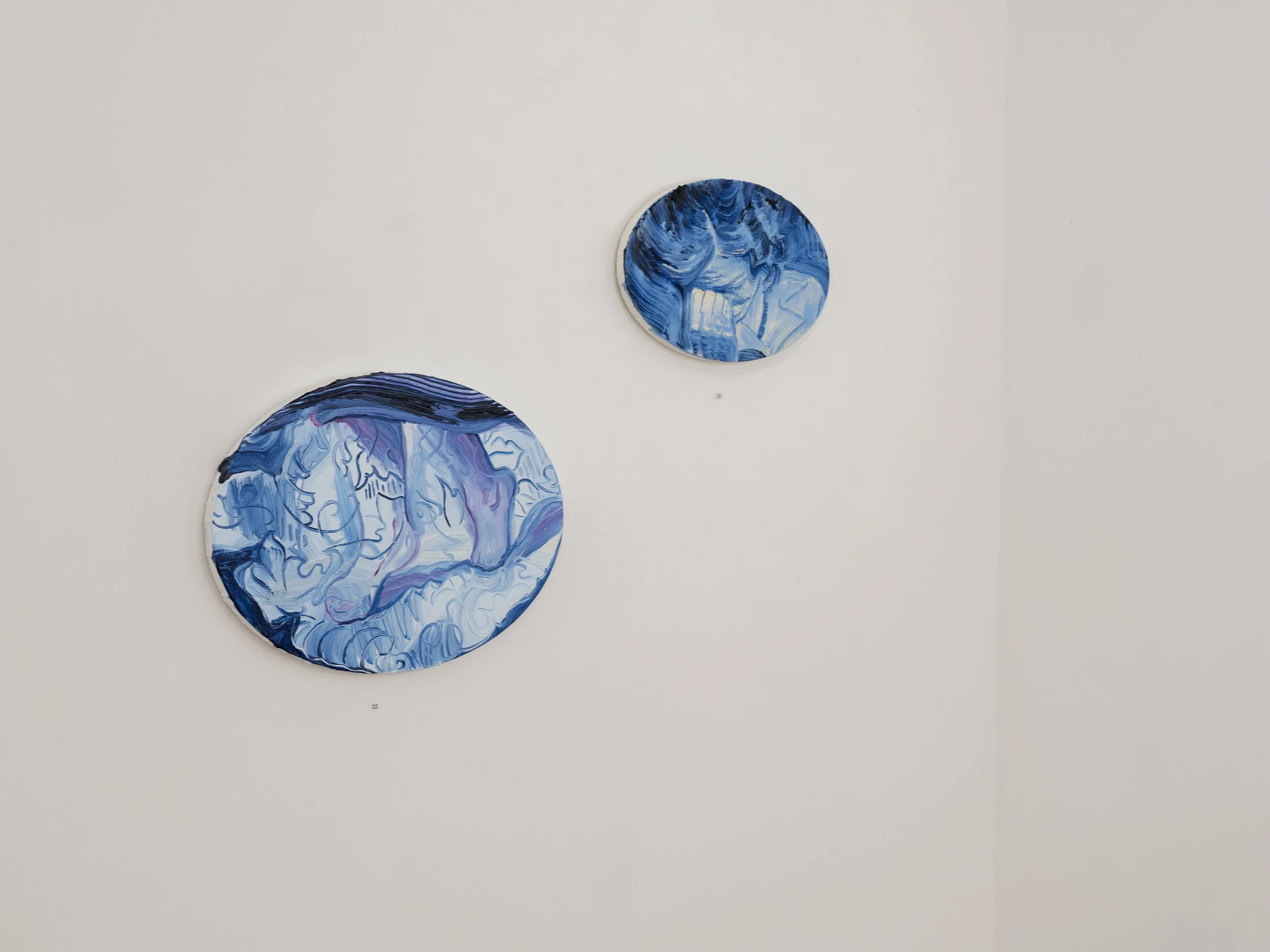
Lucy Cade is a painter with a lifelong interest in film and drama. Method Acting has been a particular fascination for her in recent years which is evident in her show at Fitzrovia. The techniques, developed by Russian theatre director Konstantin Stanislavski, aim for convincing acting through identifying with a character’s inner motivation and emotions. Lucy embraced the phenomenon both as subject-matter - capturing despair, deviousness and thrill - and as a formula for painting: executing the portrait, she actively moves in front of the canvas; dancing almost; internalising the experience of her subject. As such, the title of the exhibition, Dancing to a Mirror, is the artist’s personal, and inevitably intense, experience of painting.
In exploring method acting, driven by empathy, Lucy devoted her attention to the female actor as a subject. Empathy, in her own words, ‘promotes a particular kind of prescience and involvement in the act of painting. The painting is not a separate entity but something I become a part of, intellectually and emotionally, in the process of creating’.
However, Lucy is not a gestural painter. She builds her compositions with meticulous care, demonstrating patience and an understanding of both colour relationships and the application of paint using brushes of a variety of sizes. The application is swift at times, but never hurried. In this, one can detect influences of the French and Italian 18th and 19th century masters, which is not surprising, remembering the despair and suffering of Géricault’s battlefield scenes.
The recurring oval shapes evoke mirror-like self-reflection and self-absorption but also a state of being in which one’s existence is the only certainty and the performance of it the only reality. The viewer is encouraged to observe, in the manner of fin-de-siecle poet Arthur Symons’ 1895 work ‘La Mélinite’ about the famous cabaret dancer Jane Avril:
'....Alone, apart, one dancer watches
Her mirrored, morbid grace;
Before the mirror, face to face,
Alone she watches
Her morbid, vague, ambiguous grace’.

Disrupted Icons (The Maternal Gaze)
The Crypt Gallery, London, November 2022
Curated by Josephine-May Bailey & Lucy Cade, with an interactive musical soundscape by Eleanor Turner
This exhibition was the result of a collaboration between visual artist Lucy Cade and sound artist Eleanor Turner. Their work questions and celebrates modern motherhood, stressing the necessity for reinvention alongside traditional or religious expectations of ‘Mother and Child’. Lucy and Eleanor have archived the show here, but it continues to evolve. The starting point for the project was the opening ‘Chapel Scene’ of Andrei Tarkovsky’s film ‘Nostalghia’. See below to watch the clip of the film, complete with a sample of Eleanor's soundscape.
The project deep-dives into religious iconography (prompted also by Cade’s residency in northern Italy) combined with references to the artists’ lives: in particular, Cade’s work is filtered through the trauma of her own experiences of post-natal psychosis. Turner’s soundscape samples birdsong (referencing the Tarkovsky scene and the associated symbology of birds) and her harp playing in a sonic exploration of what it means to be a mother today: heart rate monitors play alongside the creative sounds of Cade’s studio.