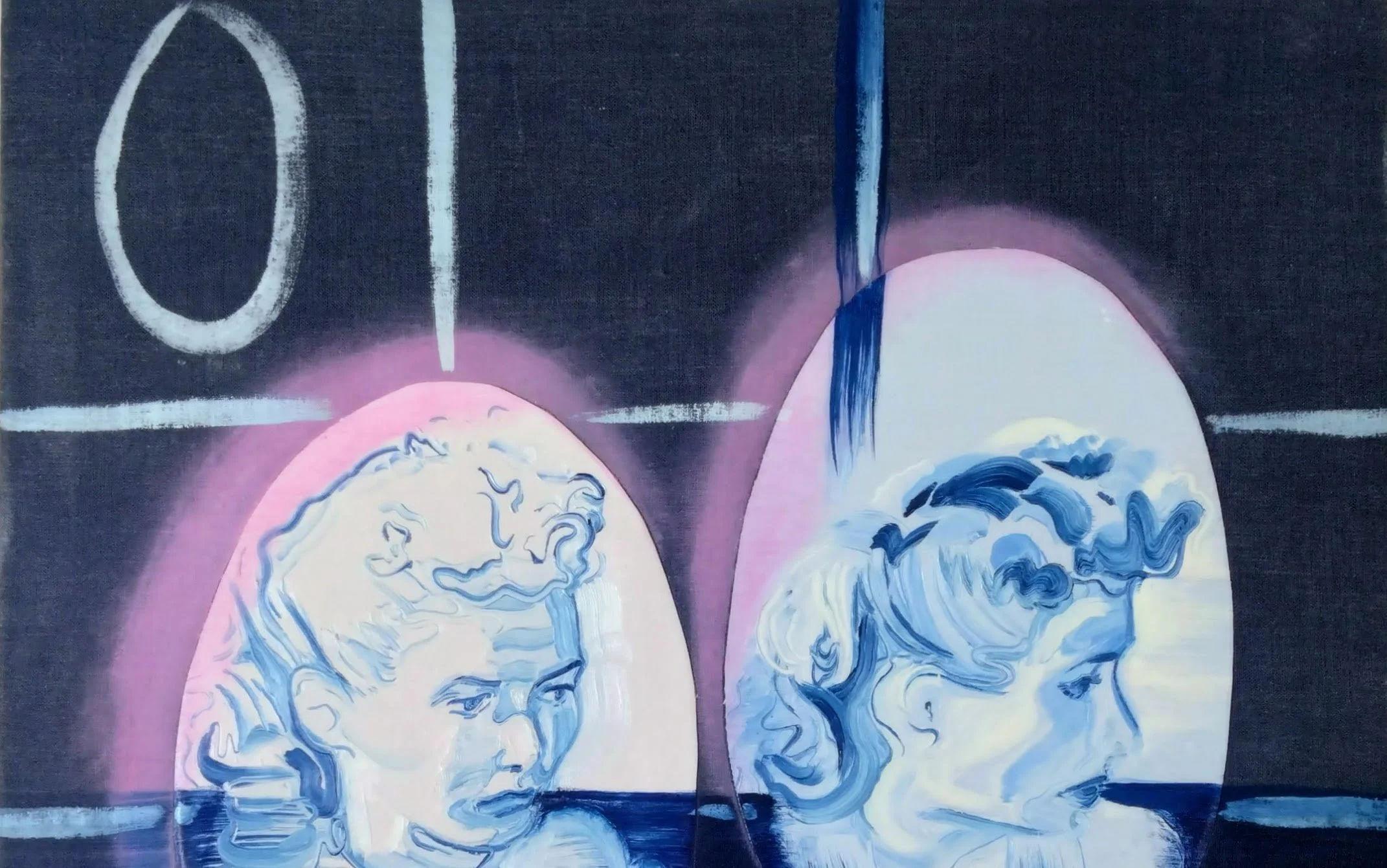

The Players (Xs & Os), Oil on canvas collage, on cotton-linen mix, 60 × 60cm, 2025
Lucy Cade is an artist living and working between Lincolnshire/Rutland & London, UK. Prior to her MA Fine Art at City & Guilds of London Art School (Distinction, 2023) and participation in various Turps Art School programmes, Lucy completed a BA in Classics/Philosophy at Oxford University. Recent shows include her solo 'Dancing to a Mirror' at Fitzrovia Gallery and group shows at Seager Gallery, Cynthia Corbett Gallery, Liliya Gallery and Terrace Gallery. She was shortlisted for Jackson's Painting Prize 2022 and Wells Art Contemporary 2023. After receiving Arts Council funding in 2021 to explore her lived experience of postnatal psychosis through painting, she has focused on projects which consider women’s mental states & memory.
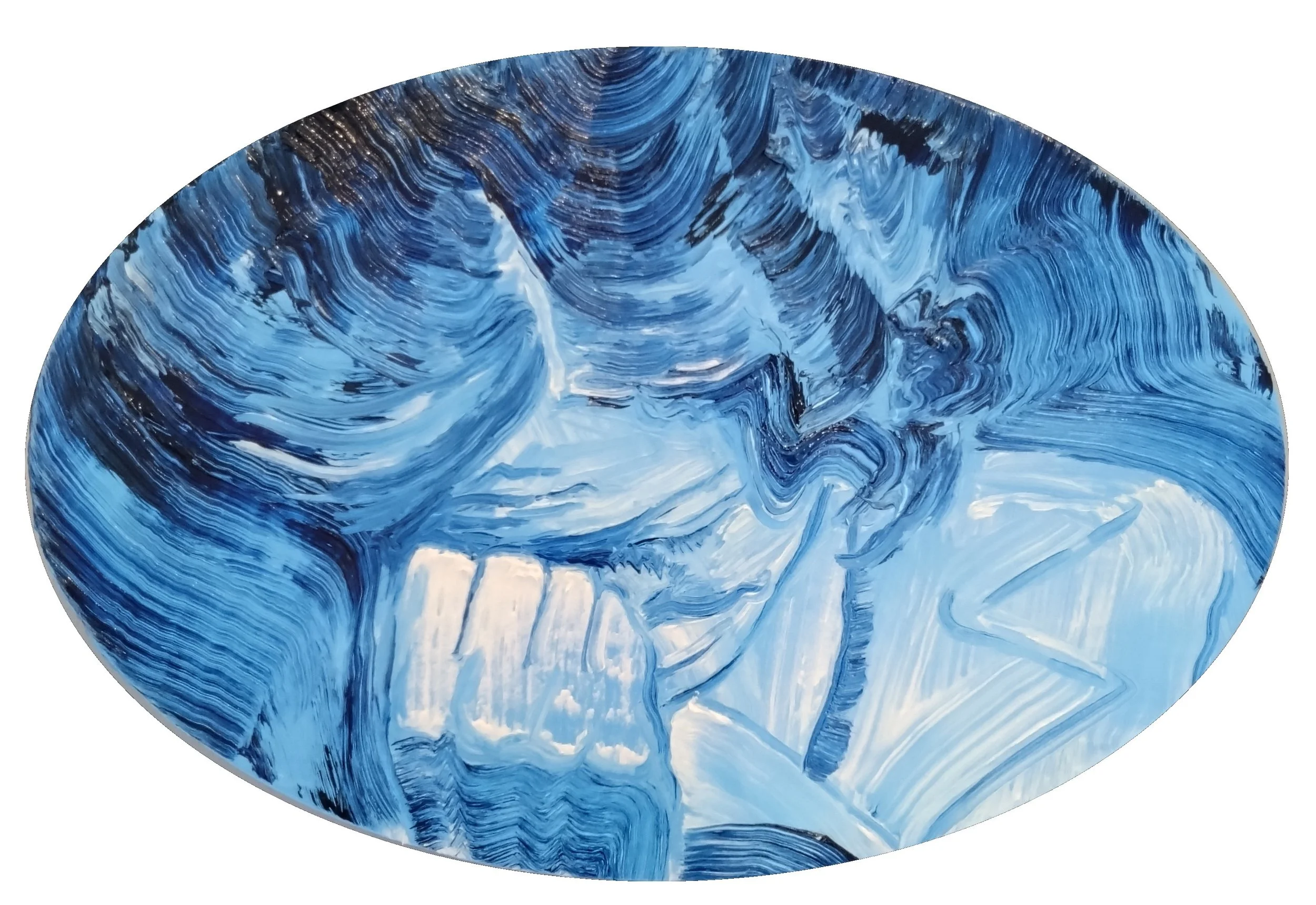
The Dark Glass,
Oil on canvas, 20 x 30cm, 2024
The Dark Glass is a painting based on my study of Ingmar Bergman’s film Through A Glass Darkly (1961), which charts the psychotic illness of the main female protagonist on a remote Swedish island. The oval cropping, as in much of my oeuvre, accentuates the emotional intensity of the work, capturing a chilling, yet moody moment of trauma through carefully considered brushwork. It also presents a contemporary contradiction in response to the historical sentimentality of the oval portrait in relation to women.
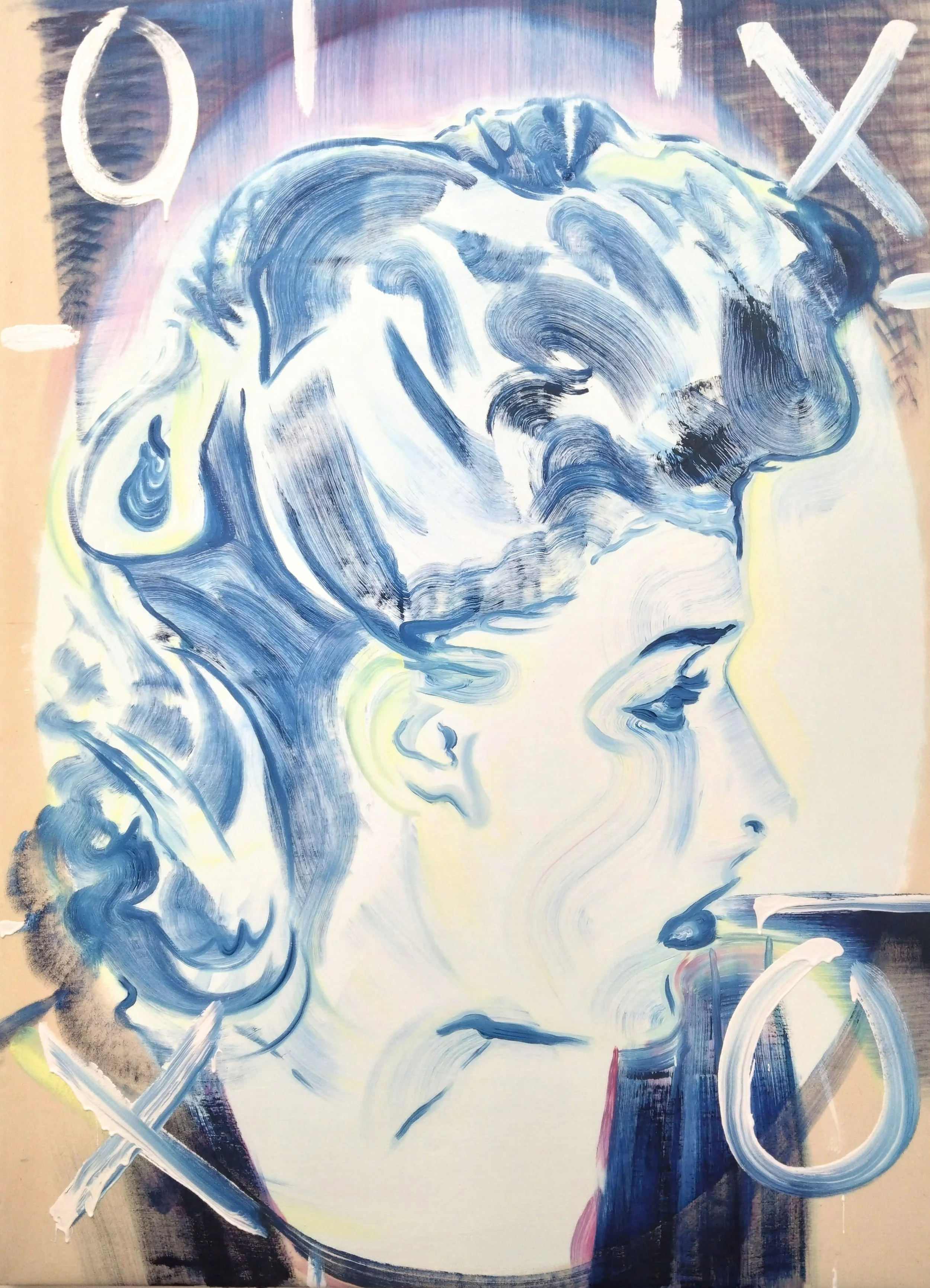
Opening Move,
Oil on canvas, 190 x 140cm, 2025

Based on photos taken of Alfred Hitchcock’s film Spellbound (1945), Opening Move is a painterly representation of the female protagonist’s role (played by Ingrid Bergman). I was particularly struck by the on- and off-screen demands on women like Bergman, and how they appear hemmed in by a limited number of choices and ‘moves’, rather like in a game of Noughts & Crosses. The ‘positive’ oval O and the ‘negative’ X can be seen to evoke conflicting roles in films such as these, where conflicts often play out along gender lines. The painted O echoes Cade’s characteristic tendency to employ oval framing devices for her female portraits, alluding to the way in which women have been frequently idealised, romanticized & turned into decoration in this format and questioning the limitations it places on our perception of women from the past. In terms of style, the thick striated strokes and reduced palette give a sense of immediacy, glamour and seductive presence. In this sense my female protagonists are reclaimed as vibrant individuals playing complex roles within rigidly defined parameters.
Folies a Deux (The Madness of Two) (1),
Oil on wood, 60 x 80cm, 2025
Part of a series of responses made (on the theme of ‘doubles’) to the passionate friendship of the two female protagonists in Peter Jackson’s film Heavenly Creatures (1992).
Get in Touch
Whether you have a question, an idea, or just want to say hello, feel free to reach out to me - I’m here to help.